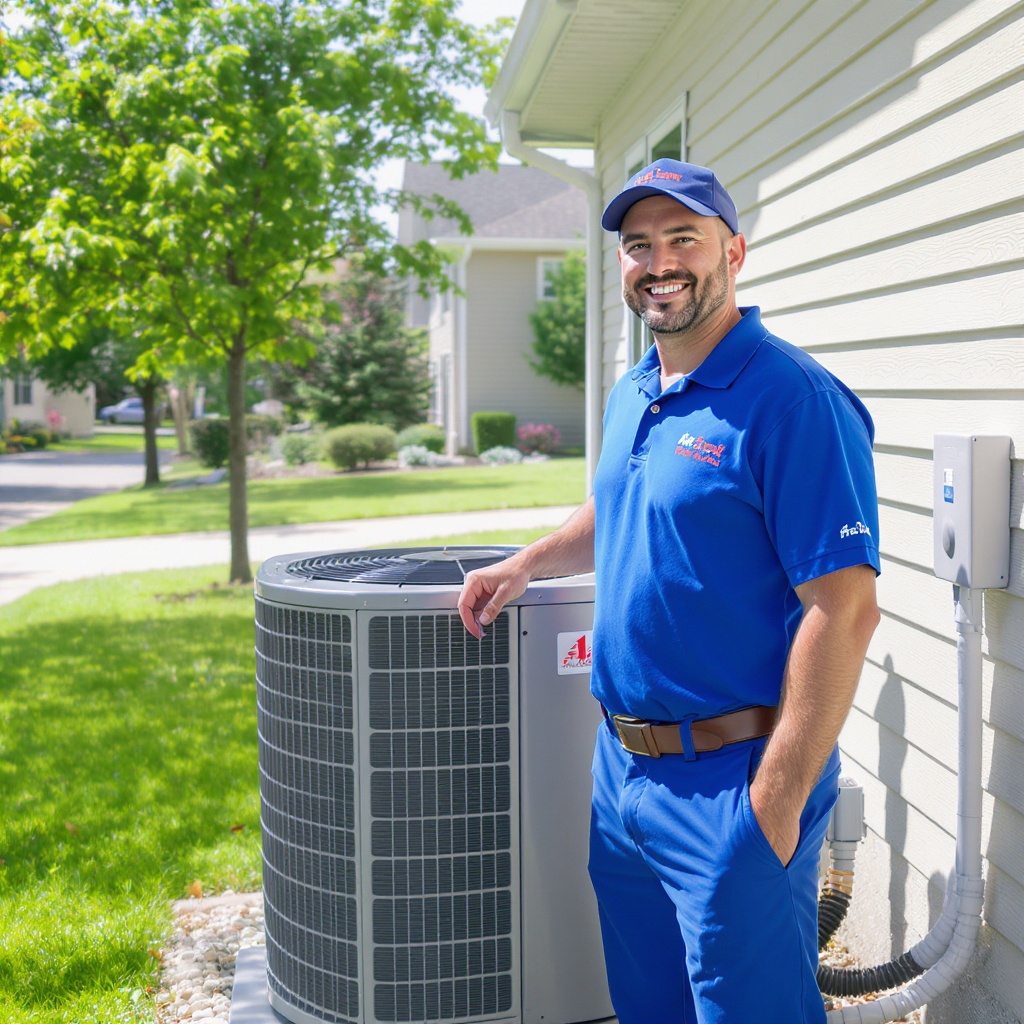
Why Tampa AC is its own trade
If you're searching for "AC repair Tampa" or "Tampa HVAC company" in July, you're not shopping for a routine service call. Tampa runs a 90°F+ summer with humidity routinely above 80%, and a home's AC system carries more runtime hours per year than almost any climate in the country other than Phoenix and South Florida proper. The equipment that lasts 18 years in Atlanta regularly fails in 10–12 years along Tampa Bay because it never gets a real off-season.
Three forces drive most of the AC and HVAC work Tampa homeowners get called out for: cap-and-compressor wear from year-round runtime that ends capacitor and contactor life early; hurricane-season storm surge and power events that take out whole home AC systems in a single afternoon from June through November; and ductwork in pre-2000 Tampa housing stock — particularly in Carrollwood, Town & Country, and older South Tampa blocks — that leaks conditioned air into the attic faster than the system can produce it. Homeowners searching for "AC repair cost Tampa" or "hurricane prep HVAC Tampa" are usually trying to handle one of those three. This guide covers the 2026 cost ranges, the hurricane-prep cadence, and the licensing-and-vetting steps that separate a real Tampa HVAC company from a storm-chasing out-of-area crew.
See our Tampa HVAC company main page →
2026 AC repair cost ranges in Tampa
Tampa AC repair pricing in 2026 depends on the part that's failing, the system age, and whether the repair pushes you toward full replacement. These are the ranges well-run Tampa HVAC companies are quoting right now:
- Capacitor replacement (single or dual run capacitor): $150–$450. The single most common Tampa service call — capacitors are an everyday-wear part and rarely survive past year 8 in this climate. A good HVAC tech carries them on the truck and bills it as a 30-minute repair
- Contactor replacement: $180–$400. Tied to capacitor failure on the contactor's downstream side. Almost always paired with a capacitor swap inside the same visit
- Refrigerant recharge (R-410A, line-set leak diagnosed separately): $450–$1,200. By Florida HFC regulation (Rule 61-31), any system topping 2.5 lbs has to be leak-tested and repaired before charging — so a "recharge" alone almost never happens
- Compressor replacement (single-stage or two-stage): $1,800–$3,800. After year 10, the right answer on most systems is full replacement rather than a compressor swap. If your Tampa HVAC tech pushes compressor replacement on a 15+ year old system, get a second quote
- Evaporator coil replacement (indoor): $1,400–$2,800. Often paired with a compressor failure when debris is pulled into the coil. Almost always a replacement trigger rather than a repair
- Whole-home AC replacement (3-ton to 5-ton, 15–17 SEER2): $6,500–$12,500 installed. The most common scope after a major failure or a system that has aged past 14–16 years. Post-hurricane demand in 2024–2026 has kept pricing firm across Hillsborough and Pasco counties
- After-hours / weekend emergency dispatch: $200–$500 trip-charge premium on top of repair costs. Tampa HVAC companies layer an after-hours multiplier that ranges 1.5×–2× the weekday rate, billed up front before the truck rolls
What a real Tampa AC repair quote includes: the diagnostic, the failed part itself (capacitor, contactor, refrigerant, motor, coil, compressor), labor to remove and install, a system performance check after the repair (temperature split, static pressure, amp draw), and a written labor warranty on the repair. If a quote folds a "diagnostic fee" of $120+ into a $180 capacitor swap with no breakdown, ask why — that's a markup that doesn't belong on a one-visit repair.
Spread between contractors for the same scope is typically 20–35%. That spread is overhead, warranty terms, and how much post-repair follow-up (a 30-day no-leak guarantee on refrigerant work, for example) is bundled in. Get three quotes on any repair above $1,500, and compare line items.
Hurricane-season prep cadence for Tampa AC systems
Tampa Bay has run a major hurricane (Category 3+) inside its radius roughly every 25 years on average — Hurricane Ian (2022) produced widespread system damage across Hillsborough and Pinellas even though it made landfall south of the metro. The single biggest prep variable you control is whether your AC survives the storm in working order and is restored to service fast. The right prep cadence for Tampa homeowners is three-stage — pre-season inspection, mid-season surge protection, and post-storm checks.
- Pre-season inspection (May, before hurricane season starts June 1): schedule a Tampa HVAC tech to walk the system. The visit should include a capacitor and contactor check, an amp-draw and temperature-split baseline measurement coil-side and condenser-side, condensate line flush, and a full look at the outdoor unit mounting and tie-down. An unattached or rotted condenser pad is the most-overlooked failure mode after a storm — winds lift the entire unit and the lineset rips at the coil $350–$700 for a standard inspection; well worth it to identify failures before storm season crashes contractor capacity
- Surge protection (June, mid-season): install a whole-home surge protector on the electrical panel and a dedicated mini-surge protector on the outdoor condenser unit. Central Florida is one of the highest lightning-strike densities in the country, and a single nearby strike can take out the contactor and the board on a Tampa AC unit in one event. A panel-mounted surge protector runs $300–$600 installed; the condenser-side protector is $80–$200 added at the disconnect. Cheap insurance on any 5-year-old system
- Post-storm checks (after every tropical-storm or hurricane event): even if your home never lost power, walk the system the day after. Check the outdoor unit for physical damage or shifted position, confirm the disconnect is dry and intact, restore power at the breaker only after the system has had 4+ hours to dry out, and run the system for 30 minutes to confirm temperature split matches the pre-storm baseline. Any drop in performance after a storm is reason to call a Tampa HVAC tech — most post-storm damage is moisture-driven and shows up over the next 2–4 weeks, not the day of
Tampa HVAC capacity drops sharply during hurricane season. The week after a major storm, well-run Tampa companies are running 60+ hour weeks, dispatching in priority order (medical-equipment customers, post-storm no-cool families, then routine maintenance). Pre-season prep in May is the single best insurance against 2-week waits when something actually fails in September.
What hurricane damage actually does to a Tampa AC system
After Hurricane Ian and the 2024 hurricane season, well-run Tampa HVAC companies started tracking storm-related system damage in three patterns. Knowing which one you have determines what the repair or replacement will cost and how fast the right tech actually responds.
- Power-surge damage to the control board and contactor: the most expensive single-event failure. The outdoor unit took a lightning strike or utility-side surge and the board is fried. Typical repair: $900–$2,400 for board + contactor + diagnostic. After a major storm, replacement parts for popular board models are typically back-ordered for 2–6 weeks across Hillsborough and Pinellas
- Physical displacement of the outdoor condenser: wind gusts above 80 mph can shift or topple the outdoor unit if the pad is rotted or the line set was over-tightened. The repair lineset at the coil and re-pour the pad. Typical repair: $450–$1,800, more if the lineset itself has to be replaced because it stretched at the flare
- Flood-water contamination of the air handler and ductwork: storm surge in South Tampa, Shore Acres, and parts of Pinellas got into the air handler closet and the duct trunk. The right scope is full duct sanitize or replacement rather than a surface clean. Typical repair: $1,800–$5,500 depending on duct material and contamination extent. Insurance Almost always applies — but only if the home has flood insurance through a separate policy, not just wind coverage
Document everything before any cleanup. Tampa homeowners filing an insurance claim after a storm should photograph the failed equipment, the surrounding damage, the breaker panel, and any standing water inside the air-handler closet before a Tampa HVAC tech arrives. Storm-damage HVAC claims in Florida require this documentation to confirm the loss event, and adjusters can take 5–14 days to schedule inspection after a major event.
How to vet a Tampa HVAC company
Tampa Bay is a competitive HVAC market, and the spread between a year-round Tampa HVAC company and a storm-chasing out-of-state crew is enormous — particularly after a major hurricane. Before you sign anything, verify these:
- Florida Certified HVAC Contractor license (CMC or RMG): required for any HVAC work in Florida performed under business — apprentices and registered techs work under a Certified Contractor. Verify through the Florida Department of Business and Professional Regulation (DBPR) at myfloridalicense.com — free, public lookup, takes 30 seconds
- DBPR standing — active license, no disciplinary actions: confirm the license is current, that no recent enforcement actions are on file (search at myfloridalicense.com and on the DBPR complaint portal), and that the company name on the quote exactly matches the name on the license. Mismatched names are a yellow flag for shell operations that materialize for storm season
- Florida Building Code & mechanical-permit pull: any compressor, coil, or full-system replacement in Florida requires a mechanical permit and a post-install inspection by the local building department (Hillsborough County, Pinellas County, Pasco County, City of Tampa). If your Tampa HVAC contractor isn't pulling a permit for replacement-level work, they're skipping code — that's a problem at insurance claim time and at home sale time
- Brick-and-mortar presence across Tampa Bay: a Tampa PO box and a Google Voice number is a yellow flag. Verify the business address is a real shop with inventory, marked trucks, and a service team that rolls out from somewhere real. After Hurricane Ian in 2022, Hillsborough County fielded an unusually high number of complaints against out-of-state "HVAC" companies that vanished the week after the storm
- Written warranty terms — parts AND labor: manufacturer warranties cover the equipment (condenser, compressor, coil). Only the contractor's labor warranty covers the install or repair. Get it in writing, in the quote, and read the exclusions. A 1-year labor warranty on Tampa repairs is the floor; solid companies offer 2–5 years on full-system installs
- Storm-response crew capacity: if you're filing a storm-damage claim, you need a contractor who can ramp up post-storm. Ask how many service trucks they run during peak hurricane season and how they prioritize calls. A Tampa HVAC contractor with a real local dispatch is worth more in the 2 weeks after a storm than a national brand with a toll-free number
- Local references with the specific scope: capacitor and contactor swaps are different crafts from compressor replacement, duct retrofit, and storm-damage restoration. Ask for 2–3 references on work that matches what you're hiring them for, and call them
Browse the Tampa HVAC company main page →
Frequently asked questions
- How much does AC repair cost in Tampa for a typical service call? Expect $150–$450 for the most common repairs — capacitor or contactor replacement, which Tampa HVAC techs complete in a single visit. Larger repairs like compressor replacement run $1,800–$3,800, and a full system replacement lands at $6,500–$12,500 installed for a 3-ton to 5-ton 15–17 SEER2 unit in Hillsborough and Pinellas counties
- How often should I service my AC in Tampa? Twice a year — a spring tune-up (March–April) before the heavy runtime starts, and a fall check (October–November) after peak season. Tampa runtime is so heavy that 18-month service intervals that work in Atlanta will shorten compressor life here by 30–40%
- Do I need surge protection on my Tampa AC unit? Yes — Central Florida is the highest lightning-strike density in the country, and a single strike can take out a contactor and board in one event. A panel-mounted surge protector is $300–$600 installed; the condenser-side protector at the disconnect is $80–$200 added at a service visit. Strong insurance on any 5-year-old system
- What hurricane prep does my Tampa AC need? Schedule a pre-season inspection in May, install surge protection on the panel and condenser by June, and walk the system visually after every tropical storm or hurricane event. The May inspection costs $350–$700 and is the single best insurance against 2-week waits during hurricane season
- How do I verify a Tampa HVAC contractor's Florida license? Look up the Certified HVAC Contractor (CMC or RMG) license on the DBPR website at myfloridalicense.com. Free, public, takes 30 seconds. Confirm the company name on the quote matches the license exactly
- Is hurricane damage to my AC covered by homeowners insurance? Wind-driven storm damage is covered under most Florida homeowners policies — but flood-driven air-handler contamination requires a separate flood insurance policy through the NFIP. Storm-surge damage to the air handler won't be paid under wind coverage; verify your flood policy before storm season
Bottom line for Tampa homeowners
If you have a capacitor or contactor failure, expect to budget $150–$450 for the most common Tampa AC repair. If you're facing compressor replacement or full-system failure after years of year-round runtime, expect $6,500–$12,500 installed for a 15–17 SEER2 swap. Schedule a pre-season inspection in May, install panel and condenser surge protection by June, and walk the system after every tropical event. Verify the Florida Certified HVAC Contractor license through DBPR, insist on a permit pull for replacement-level work, and pick a Tampa HVAC company with real Bay-area shop presence — not an out-of-area crew that materialized for the storm.
Searching for a Tampa HVAC company you can trust before something breaks or a storm hits? Start with our Tampa HVAC company main page for what a high-performing Tampa Bay contractor website should look like — and what to look for when you're shopping for emergency AC repair or post-storm HVAC restoration.
Ready to put this into action?
LocalLift builds high-converting websites for HVAC contractors. Get yours built and running in days — not months.
See our HVAC website solution →